
· by Michael Blair, Nashville's Electrician
Older houses around Nashville can still carry three kinds of wiring that worry buyers, and homeowners are often told all of it is a crisis. It is not. One has a documented fire record, one needs a careful look before anyone decides anything, and the third mostly limits what you can plug in. When we find any of them, we sort out which is which before anyone starts pricing a whole-house rewire.
Knob and tube
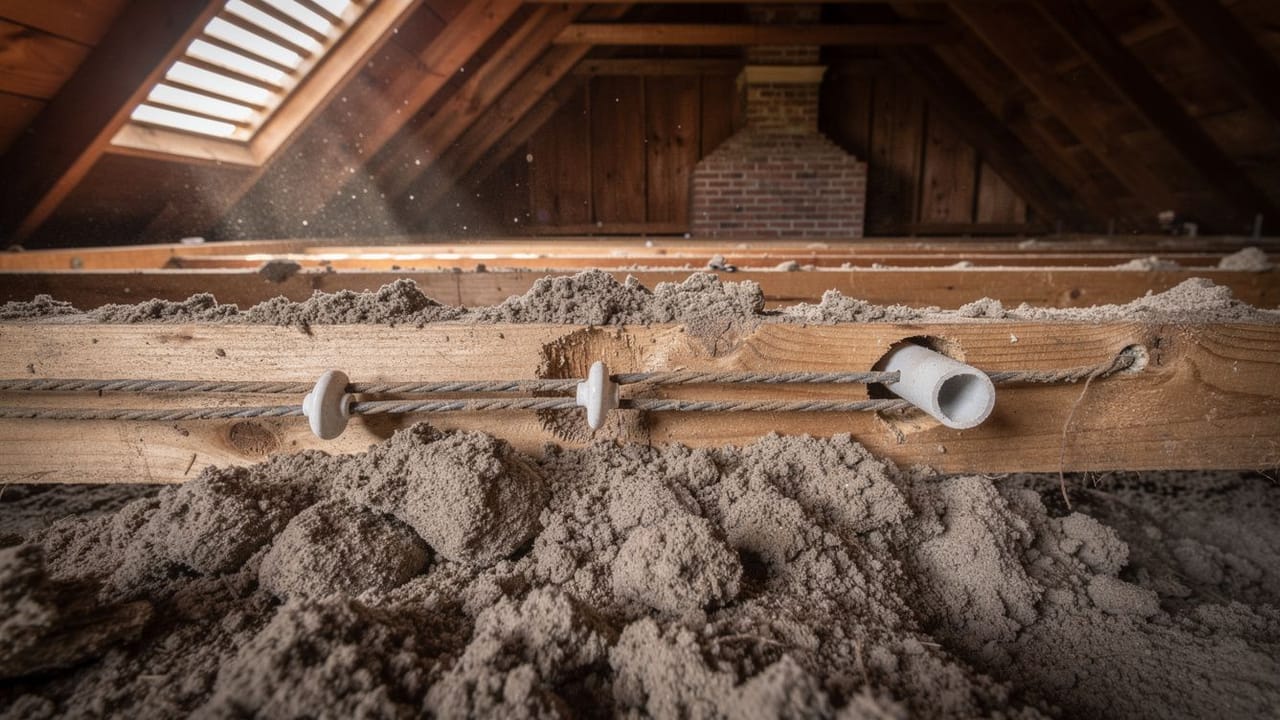
This is the oldest of the three: two separate wires strung on porcelain knobs and passed through porcelain tubes in the framing. When we come across it, we look at the insulation on the conductors wherever we can reach it, at whether anyone has spliced newer cable into the old runs, and at whether the circuits are carrying more than they were run for.
The attic is where we start. Once insulation has been blown over the old runs, nobody can see what condition the wire is in, and whether knob and tube can stay inside an insulated space is a code question. Metro Nashville’s adopted codes list shows the 2023 National Electrical Code in force here, with local amendments, so that is the edition we check the house against. Ask your insurance carrier what it will write before you plan around keeping it.
Aluminum branch circuits
A copper shortage in the mid-1960s pushed builders to use aluminum on ordinary 15- and 20-amp circuits, and the Consumer Product Safety Commission’s publication on aluminum wiring says cable put in between 1965 and the mid-1970s, in new homes, additions and rewired circuits, may be aluminum. The trouble is at the connections. CPSC describes them deteriorating over time, so resistance climbs and the joint overheats while current flows.
This is the one with a documented fire history. A national survey done for CPSC found that homes built before 1972 and wired with aluminum were 55 times more likely than copper-wired homes to have an outlet connection reach fire hazard conditions. Fixing it does not have to mean a rewire. Short copper pigtails joined with a COPALUM crimp, or with an AlumiConn connector where COPALUM is not available, are the two connector repairs CPSC accepts as permanent, and the repair has to reach every aluminum connection and splice in the house, light fixtures, appliances and junction boxes included, not only the receptacles. Warning signs are rare, by CPSC’s account, and a cover plate that is hot to the touch or a light that flickers is among the few it names; our post on flickering lights goes through the other causes.
What is the problem with two-prong outlets?
They are mostly an inconvenience. A two-prong receptacle has nothing for the third prong of a modern plug to connect to, and putting a three-prong receptacle on the same two wires changes how it looks and nothing else.
Where running a new ground to the box is not practical, what we install is GFCI protection, with the receptacles marked as having no equipment ground, checked against the code edition Metro has adopted before the cover plates go back on. Which rooms need GFCI or AFCI protection anyway is a separate question, and our post on where GFCI and AFCI are required covers it.
- Knob and tube: check its condition, especially where insulation covers it
- Aluminum branch circuits: a CPSC-accepted repair at every connection and splice
- Ungrounded outlets: a new ground, or GFCI protection with correct marking
- Cloth-sheathed cable: we check its condition at the panel and the boxes
What should you do before buying a house with old wiring?
Have the panel and a sample of accessible junctions looked at before purchase, and tell your insurer what is there; finding out after closing what a carrier will not write is the wrong order. On a walk-through, CPSC’s way of spotting aluminum is worth borrowing: the cable jacket is marked “Al” or “Aluminum” every few feet, and it can be read in unfinished basements, attics and garages. Cable marked copper-clad is a different product, and the CPSC repair advice does not cover it.
If walls are coming open anyway, that is the easiest time we will ever have to run new wire. CPSC calls a copper rewire the best fix and also says that, for many homes, it is impractical or prohibitively expensive, with the layout and the amount of unfinished space deciding how hard it is. The agency also wants the work performed and inspected under local regulations, and Metro’s trades permits page says only licensed contractors with an e-permit account can apply for an electrical trade permit online. Once you know what is in the walls, ask us for a free estimate.
Sources
- U.S. Consumer Product Safety Commission, Aluminum Wiring (Publication 516, June 2011) — Copper shortage; 1965 to mid-1970s; connection deterioration and overheating; 55 times survey figure; COPALUM and AlumiConn repairs at every connection and splice; Al marking and copper-clad exclusion; rewiring best but often impractical; trained installers; inspected under local regulations; twist-on and CO/ALR not permanent
- Metro Nashville Codes and Building Safety, Adopted Codes List — 2023 National Electrical Code adopted with local amendments
- Metro Nashville Codes and Building Safety, Trades Permits — Only licensed contractors with an e-permit account apply online; electrical trade permit application
FAQ
What Old Wiring in Nashville Homes Means — questions
Does knob and tube wiring need to be removed?
Not automatically. Whether it can stay depends on the condition of the wire, whether insulation has been blown over it or newer cable spliced into it, and what the code in force allows, which in Metro Nashville is the 2023 National Electrical Code with local amendments. Your insurance carrier may take its own view, so ask before you plan around keeping it.
Is aluminum wiring in a house a dealbreaker?
No, but it needs a permanent repair, and that should be priced into the purchase. The Consumer Product Safety Commission accepts three: replacing the aluminum with copper, pigtailing every connection with COPALUM crimp connectors, or AlumiConn connectors where COPALUM is not available. It does not accept twist-on connectors or CO/ALR devices as a permanent fix. Only electricians trained by the manufacturer may install COPALUM, so ask who will do the work.
Can I put three-prong outlets on ungrounded wiring?
Not by swapping the receptacle and leaving it there. A three-prong outlet with no ground behind it looks like it offers a ground it does not have. What we install instead is either a new ground run to the box or GFCI protection with the receptacles marked as having no equipment ground, checked against the 2023 National Electrical Code that Metro Nashville has adopted.
What does knob and tube wiring look like?
Two separate wires running apart from each other, held on porcelain knobs and passed through porcelain tubes set in the framing. The attic is where we look first. Once insulation has been blown over the runs, the wire can no longer be seen, and whether it may stay inside an insulated space is a code question.