
· by Michael Blair, Nashville's Electrician
Flickering lights get dismissed because they usually turn out to be something small: a bulb on its way out, an LED that does not get along with its dimmer, a bulb that has worked itself loose in the socket. A few patterns are worth taking seriously, though. The U.S. Consumer Product Safety Commission puts flickering lights on its short list of signs of electrical system problems in its publication on repairing aluminum wiring, alongside hot cover plates and the smell of burning plastic, and says to have a qualified electrician find the cause rather than trying it yourself. Sorting the harmless kind from the other comes down to noticing which lights flicker, when, and whether anything else in the house changes at the same moment.
When is a flickering light harmless?
One fixture flickering while everything else stays steady starts with the bulb. If it is an LED on a dimmer, we check two things before anything else: whether the bulb is marked dimmable, and whether the dimmer is one made for LED loads, and we change whichever one is wrong before going any further. An old fluorescent tube in an unheated garage gets a new tube before anyone opens a box, and a smart bulb that keeps dropping out is worth checking against the wall switch that feeds it.
A short dim at the moment the refrigerator, the dryer or the air conditioner kicks on is not something we chase by itself. What we want to know is whether it is quick, about the same size every time, and gone a second later. A dip that lingers, one that has grown over the months, or one that shows up when nothing is starting belongs in the next section. For a single room or fixture that will not settle down, our troubleshooting and repair work starts at that box and works back toward the panel.
When do flickering lights need an electrician?
When lights on several circuits flicker together, or the whole house dims and brightens with no appliance starting, we look at the connections those circuits share: the meter, the main lugs in the panel, and the splice at the weatherhead where the utility drop meets the house wiring. Everything in the house passes through those few points. The reason we do not sit on a loose one is the mechanism CPSC describes for failing aluminum connections: deterioration raises the resistance to the current, and that increased resistance causes overheating, sometimes at hazardous levels, whenever current is flowing.
The pattern we treat as most urgent is some lights going bright while others go dim at the same moment, often as a large appliance switches on or off. We read that as a possible loose neutral on the service, and we would rather see it that day than later in the week. The list below is what moves a flicker call up our schedule; the hot cover plates, the burning smell and the dead circuits are on CPSC’s own list of warning signs.
- Several circuits flickering together
- Some lights bright while others dim
- Switch or outlet cover plates that are hot to the touch
- A burning-plastic smell, or buzzing or crackling, at an outlet, a switch or the panel
- Circuits that have stopped working
- Flicker that comes and goes with wind or rain
Where the fault usually is on a Nashville house
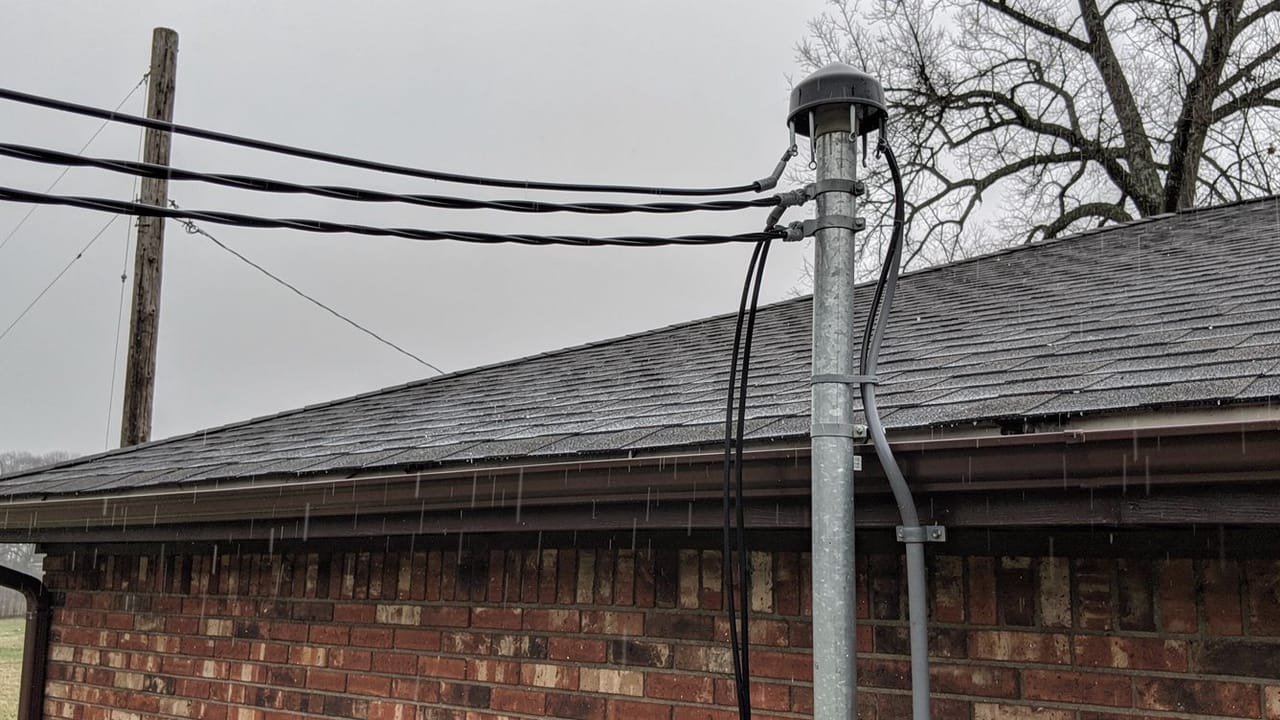
On older homes with overhead service, the splices at the weatherhead have sat out in the weather for decades, and they can be where a house-wide flicker starts. If yours shows up in wind or a heavy rain, that is the first place we look, from the ground, before anyone takes the cover off the panel.
Aluminum branch wiring is the other suspect in houses of a certain age. According to CPSC’s Publication 516, cable installed between 1965 and the mid-1970s may contain aluminum, while homes built before 1965 are unlikely to have it on their branch circuits. The same publication warns that failing aluminum connections seldom give easily detected warning signs and have been reported to overheat without any prior indication, so a flickering fixture on one of those circuits is a sign to act on. CPSC approves only three permanent repairs: replacing the aluminum with copper, pigtailing with COPALUM crimp connectors, or AlumiConn connectors where COPALUM is unavailable. Re-tightening the terminal is not on that list, and twist-on pigtails count only as an emergency, temporary repair. Our post on what old wiring in Nashville homes means covers the rest of what turns up behind the walls of older houses.
Inside the panel, we check the neutral bar screws and the main lugs for looseness, heat discoloration and corrosion. When the panel itself is old enough that repairing it is a poor bet, we will say so plainly, and replacing the panel becomes part of the conversation.
Who to call, and what they will do
If the whole house is flickering, call NES as well as us. The fault may be on the utility’s side of the meter, and we do not work on NES lines or transformers. The NES outages page lists 615-234-0000 for reporting outages and 615-736-6900 as the utility’s main number. Ask them what they will check and whether a visit costs anything, since we cannot answer that for them. If their side checks out, an electrician opens the panel, checks the main lugs and the neutral, and tightens or replaces what has failed.
Work at the service or in the panel is permitted work. The State Fire Marshal’s electrical permit FAQ says a permit is required before installing any electrical wiring that state rules require to be inspected, and the same page keeps a list of exempt jurisdictions. Whichever office covers your address, we pull the permit and book the inspection. If you cannot tell which kind of flicker you have, send us a note saying which lights, when, and what else was running at the time, and we will tell you how soon it needs a visit. For what should get a call tonight, see our post on electrical emergencies and what can wait until morning.
Do not put it off until something else fails. CPSC calls the damage in a deteriorating aluminum connection cumulative, and we treat every loose connection that carries current the same way: it does not improve with time, and the flicker may be the only warning it gives.
Sources
- U.S. Consumer Product Safety Commission, Repairing Aluminum Wiring (Publication 516, June 2011) — Flickering lights, hot cover plates, dead circuits and burning-plastic smell as warning signs; increased resistance causes overheating; aluminum in cable from 1965 to the mid-1970s; failures without prior indication; the three approved permanent repairs; twist-on pigtails temporary only; cumulative damage
- Tennessee Department of Commerce and Insurance, State Fire Marshal’s Office, Electrical Permits FAQ — A permit is required before installing electrical wiring that must be inspected; the page links a list of exempt jurisdictions
- Nashville Electric Service, Outages — Outage line 615-234-0000 and main number 615-736-6900
FAQ
Flickering Lights and When They Are Dangerous — questions
Why do my lights dim when the air conditioner turns on?
A short dip the instant the compressor starts, about the same size every time, is not something we would send a truck for by itself. What we would look at is a dip that lasts, one that has gotten deeper over the months, or lights that also flicker when nothing is starting. Any of those is worth having the service connections checked.
What does a loose neutral look like?
The sign we listen for is some lights getting brighter while others get dimmer at the same moment, often as a large appliance cycles, sometimes with electronics acting strangely. We treat that as a possible loose neutral and an urgent call: phone NES, since the problem may be on their side of the meter, and have an electrician check the service and the panel the same day.
Will the utility fix flickering lights?
We do not work on the utility’s lines or transformer, so a house-wide flicker is worth reporting to NES first. Ask them what they will check and whether there is any charge, since we cannot speak for them. If their side checks out, the meter base, the panel and the house wiring are where an electrician looks next, and Tennessee requires a permit before installing wiring that has to be inspected.
Are flickering lights dangerous?
Usually not when it is one fixture, where a failing or loose bulb or an LED on the wrong dimmer is the common cause. It is a concern when several circuits flicker together, some lights brighten as others dim, cover plates run hot or you smell burning plastic, because those point to a connection that can overheat.