
· by Michael Blair, Nashville's Electrician
Every fall in Middle Tennessee there is a stretch of chilly mornings before anyone wants to commit to the furnace, and the portable heater comes out for the home office, the bonus room over the garage or the bedroom that never warms up. A plugged-in heater is a heavy load, and unlike most things on a receptacle it runs for hours at a time. If a circuit has a weak connection, that kind of use will find it. Most of the time the result is a tripped breaker. Sometimes it is a receptacle that has browned and gone soft around the slots, and that one needs to come out of the wall.
How much a heater actually draws
Start with the rating label on the heater itself. One rated at 1,500 watts on high, at a household 120 volts, draws 12.5 amps, and on a 15-amp circuit that is most of the capacity gone before the lamp, the television or the phone charger on the same run. For a sense of the margin, an OSHA interpretation of its construction wiring rule holds a receptacle to 12 amps when more than one 15-amp receptacle shares the circuit. That is a jobsite rule rather than the code your house was wired to, but a heater by itself sits right at that line. Plug a second heater of the same rating into that circuit and you are asking a 15-amp breaker for about 25 amps, so it trips, which is the breaker doing its job.
The part people miss is time. A hair dryer runs for a few minutes and goes back under the sink. A heater can run all evening and into the night, and every joint between it and the panel carries that current the whole time. A connection that never gives trouble during a short burst now has hours in which to warm up. If a breaker of yours trips over and over, our post on a breaker that keeps tripping goes through the other reasons it happens.
Why the outlet gets warm
When we open up a warm outlet, we look at the places where current passes from one piece of metal to the next: the contacts inside the receptacle that are supposed to grip the plug blades, the screw terminals on its sides, and any wire pushed into the back-wired holes instead of wrapped around a screw. A worn or loose joint at any of those resists the current, and under a heater-sized load that resistance turns into heat right at the device.
We’d treat warmth at the wall as a reason to look closer. A cover plate that is hot to the touch, a plug that is discolored or has soft or melted prongs, a smell of hot plastic, or a heater that cuts out and comes back on by itself all mean the same thing to us: unplug it and leave that outlet unused until it has been opened up. Look the heater over too, since the U.S. Fire Administration’s space heater tips begin with checking it for cracked or damaged cords and broken plugs. Swapping out a worn receptacle and the connections behind it is part of our lighting and outlet work.
How should a space heater be plugged in?
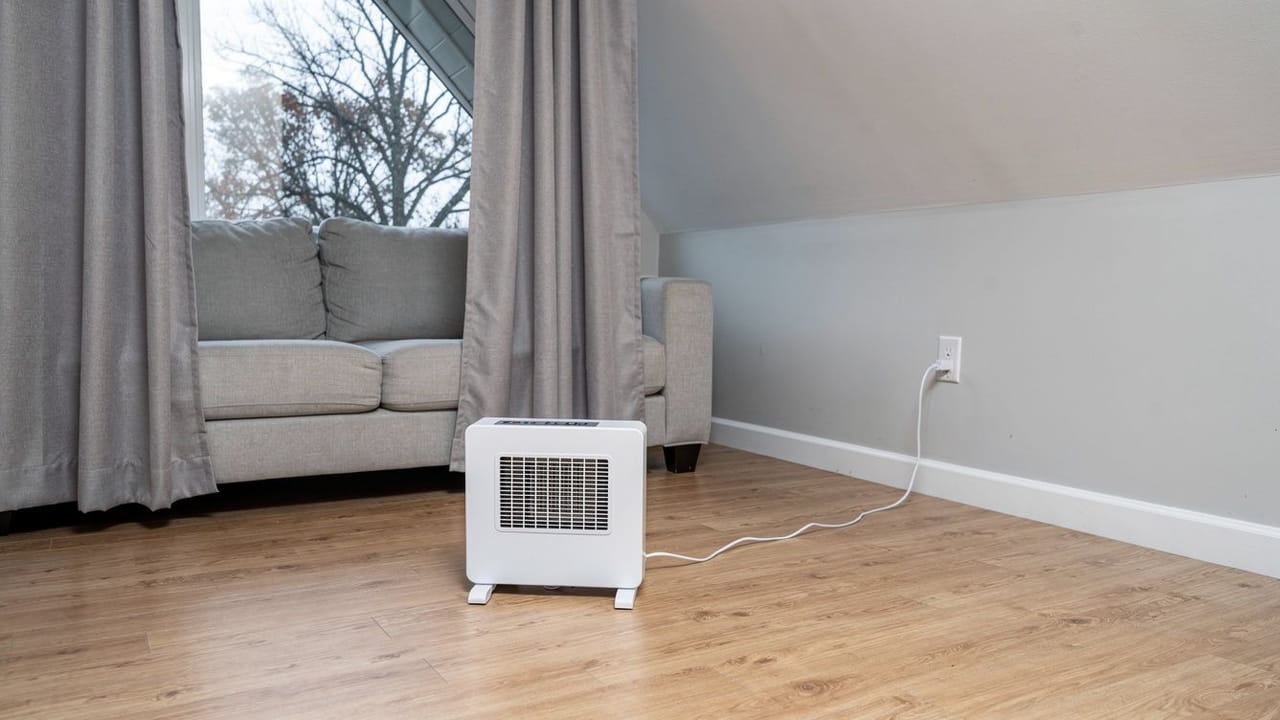
Plug the heater straight into a wall receptacle. The same USFA tips are direct about it: into the wall outlet, and never into an extension cord or power strip. Anything between the heater and the wall is one more set of contacts carrying that load for hours. Give the heater plenty of open floor, well away from bedding, curtains and furniture.
Pay attention to what else shares the circuit. In an older house one circuit may feed more than one room, so the heater in a back bedroom can trip a breaker that also runs the living room lights. The panel directory, if anyone ever filled it in, tells you which receptacles share a breaker; when it is blank or wrong, mapping the circuits is one of the first things we do on a troubleshooting call.
- One heater per circuit, plugged directly into the wall
- No extension cords or power strips on a heater
- Feel the plug and cover plate after the first hour of use
- Retire any outlet whose plug has discolored or loosened
What does it mean when a heater trips the breaker alone?
A heater that trips the same breaker every time it runs alone is telling you that circuit is already carrying other load, or that the breaker itself is weak. A larger breaker is the wrong answer. Even OSHA’s wiring standard for construction sites requires conductors to be protected from overcurrent in accordance with their ability to safely conduct current, and a breaker sized past the wire lets it carry more than that before anything shuts off. What actually fixes it is moving the load, adding a circuit, or repairing the connection that is heating up.
If a room depends on a space heater every winter, it is worth asking why it runs cold; the heating system or the insulation may be falling short, and the heater is covering for it. When we look at a room like that, we check the receptacles and connections on that circuit, and where it makes sense we run a dedicated circuit or wire in a permanent heater sized for the space.
Where that work needs a permit, we take care of it. Inside Davidson County, electrical trade permits come from Metro Codes, whose trades permit page keeps its online applications for licensed contractors holding an e-permit account. Metro’s electrical code is the 2023 National Electrical Code, which it lists as adopted with its own local amendments. Across most of the rest of Tennessee, permits come through the state fire marshal’s electrical permit program, which issues them through contracted agents and enforces the 2017 edition of the code, so the office and the code edition depend on where you live. If a room of yours runs on a space heater all winter, get a free estimate from us on giving it a circuit of its own.
Sources
- U.S. Fire Administration (FEMA), Pictograph: Space Heater Safety Tips — Inspect heaters for cracked or damaged cords and broken plugs; plug directly into wall outlets, never an extension cord or power strip
- OSHA standard interpretation, June 12, 2000 (Directorate of Construction, to Hilti) — With more than one 15-amp receptacle on a circuit, the maximum allowable load on a receptacle is 12 amps (construction-site rule)
- OSHA, 29 CFR 1926.404 Wiring design and protection — Conductors protected from overcurrent in accordance with their ability to safely conduct current (construction-site rule)
- Metro Nashville Codes, Obtaining a Trades Permit — Metro issues electrical trade permits; online applications are limited to licensed contractors holding an e-permit account
- Metro Nashville Codes, Adopted Codes for Metro Nashville — Metro’s adopted codes include the 2023 National Electrical Code, with local amendments
- Tennessee Department of Commerce and Insurance, Fire Prevention, Electrical Permits — State program issues electrical permits through contracted agents across most of the state and enforces the 2017 NEC
FAQ
Space Heaters, Warm Outlets and Your Circuits — questions
Is it normal for an outlet to get warm with a space heater plugged in?
We would treat any warmth there as a reason to look closer. A hot cover plate, a discolored or loose plug, melted plastic or a burning smell points to a failing connection, and that outlet should not be used until an electrician has opened it and repaired it. Check the heater’s own cord and plug for cracks or damage at the same time.
Can I plug a space heater into a power strip or extension cord?
Not according to the U.S. Fire Administration, whose space heater safety tips say to plug heaters directly into wall outlets and never into an extension cord or power strip. A cord or strip adds another set of connections carrying the heater’s full load for as long as it runs.
Why does my space heater keep tripping the breaker?
A heater rated 1,500 watts draws about 12.5 amps at 120 volts, which is most of a 15-amp circuit, so anything else running on the same breaker can push it over. Move the heater to a lightly used circuit, and if it trips on its own, have the breaker and the connections on that circuit checked. Do not swap in a larger breaker; it is there to protect the wire.
Where should I put my space heater?
On open floor, well clear of bedding, curtains and furniture, and close enough to a wall receptacle to plug in directly, with no extension cord or power strip between them. Choose an outlet on a circuit that is not already carrying much else, and feel the plug and cover plate after the first hour of running.