
· by Michael Blair, Nashville's Electrician
When the power goes out in Middle Tennessee it often stays out long enough for a generator to matter. The U.S. Energy Information Administration’s reliability table by state puts the average time to restore an interruption in Tennessee at 149.2 minutes in 2024 and 330.7 minutes in 2023, counting major event days. The question is rarely which generator. It is how it connects to the house, and that is where the code and the safety questions sit, and where most of our generator and transfer switch work is spent.
Why backfeeding is the thing that kills people
Plugging a generator into a wall outlet to power the house wiring is called backfeeding. The Consumer Product Safety Commission’s portable generator safety alert calls it extremely dangerous, because it puts utility workers and neighbors served by the same transformer at risk of electrocution, and it also bypasses some of the circuit protection built into the house. Generac’s article on back-feeding a panel adds that in many jurisdictions it is illegal and violates the National Electrical Code.
The people on the other end are line crews. OSHA’s guide to working safely with electricity tells anyone starting a generator to have the main breaker off and locked out first, so backfed power cannot energize the lines and electrocute the workers on them, and Generac points out that crews repairing lines may assume they are dead. When utility power comes back, generator power can clash with it, which the same Generac article says can start fires and damage appliances and the generator itself. There is no version of this we consider acceptable.
What does a transfer switch do?
A transfer switch keeps the house on one source or the other, never both. Generac describes that physical isolation as what prevents any chance of backfeeding into the grid while the generator runs, and Nashville Electric Service’s home safety page tells customers never to hook a generator directly to the home’s electrical service or wiring, because of the risk backfeeding poses to NES lineworkers. We don’t connect a generator to a house any other way.
For a portable unit we fit either an inlet box with an interlock on the panel, which keeps the main breaker and the generator breaker from being on at the same time, or a manual transfer switch that carries a chosen set of circuits. With a standby unit we pair an automatic transfer switch, so the changeover happens without anyone home. Metro enforces the 2023 National Electrical Code with local amendments, according to its adopted codes list, and the connection is electrical work: Metro Codes’ trade permits page says only licensed contractors with an e-permit account can apply for a trade permit online.
- Interlock with an inlet box: a portable unit feeding the panel
- Manual transfer switch: selected circuits, switched by hand
- Automatic transfer switch: paired with a standby generator, unattended
- Every connection we make goes in under a Metro electrical permit
Portable or standby, and how to choose
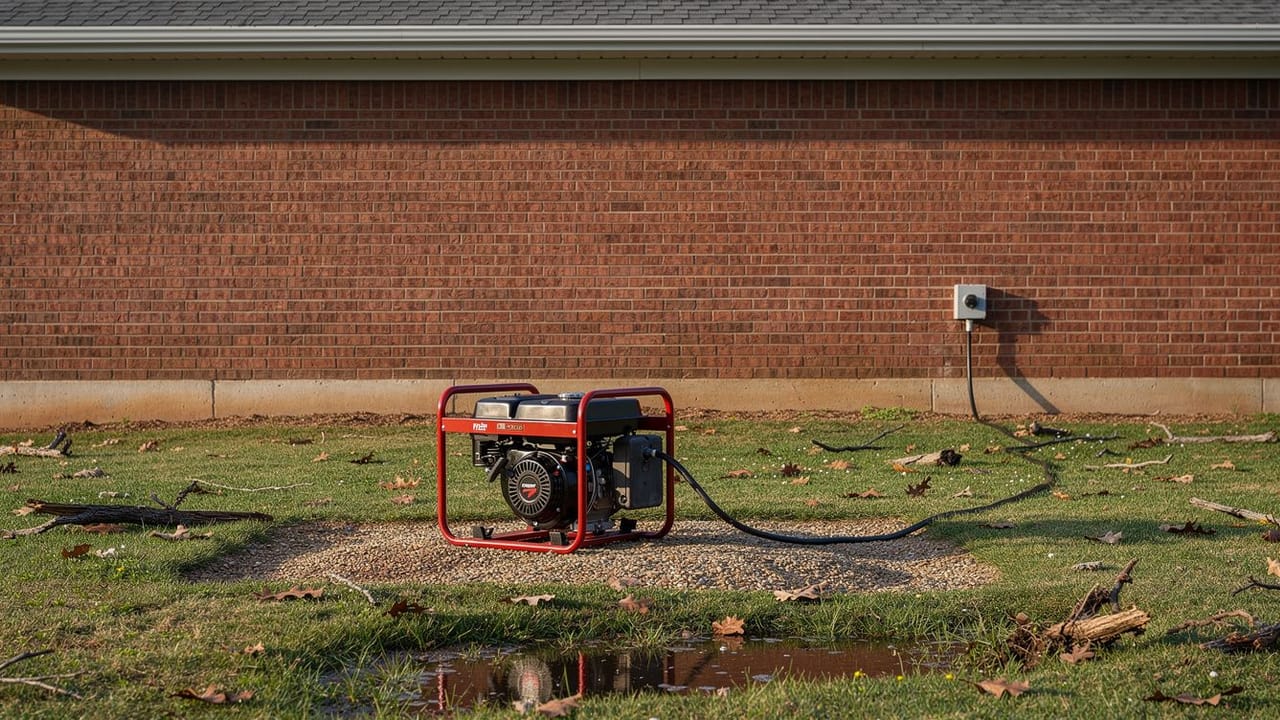
When we set up a portable generator with an inlet box and an interlock, we plan the circuits around what the household can’t do without: usually the refrigerator, the furnace blower, some lights and outlets, and the well pump if there is one. Someone has to be home to roll it out, start it and refuel it, and CPSC says to turn it off and let it cool before refueling. It runs outside only, and Ready.gov’s power outage guidance puts it at least 20 feet from windows, doors and attached garages. CPSC also recommends battery-operated or battery-backed carbon monoxide alarms in the house, which our post on smoke and CO detector requirements covers.
A standby unit runs on natural gas or propane, starts itself, and carries either the whole house or a defined set of circuits. The fuel side is its own piece of work, and Metro issues gas/mechanical trade permits separately from electrical ones, so we confirm with Codes what a given install needs before we start. The case for a standby unit is a household that cannot go without power, or a house nobody is at during storm season.
How is a home generator sized?
When we size a generator we work from what has to start, as well as what has to run. The moment an air conditioner compressor or a well pump kicks on is usually the load that decides whether a unit is big enough, so we look at those first.
The two we see left off most often are the furnace blower and the sump pump. Most gas furnaces we wire still have a blower and controls on an electric circuit, so that circuit goes on our list. And a house with a wet crawl space that loses its sump during a storm has traded a power outage for a water problem. If you want the circuits worked out for your house before the next storm, ask us for a free estimate.
Sources
- U.S. Energy Information Administration, Electric Power Annual Table 11.2, Reliability Metrics by State, 2024 and 2023 — Tennessee average restoration time (CAIDI) of 149.2 minutes in 2024 and 330.7 minutes in 2023, major event days included
- U.S. Consumer Product Safety Commission, Portable Generator Safety Alert (Publication 5123) — Backfeeding through a wall outlet is extremely dangerous to utility workers and neighbors on the same transformer and bypasses circuit protection; outside only, 20 feet from doors, windows and vents; never in garages or crawlspaces; CO within minutes; CO alarms; cool before refueling
- Generac, Why you should never back-feed your electric panel with a generator — Illegal in many jurisdictions and violates the NEC; crews may assume lines are de-energized; clash with restored utility power can cause fires and damage the generator; transfer switch isolation
- OSHA, Working Safely with Electricity (OSHA 3942) — Main breaker off and locked out before starting a generator, to prevent backfeed energizing power lines and protect line workers
- Nashville Electric Service, Electrical Safety at Home — Never hook a generator directly to the home’s electrical service or wiring; backfeeding risk to NES lineworkers
- Metro Nashville Codes, Adopted Codes List — Metro has adopted the 2023 National Electrical Code with local amendments
- Metro Nashville Codes, Trades Permits — Electrical and gas/mechanical trade permits; only licensed contractors with an e-permit account can apply online
- Ready.gov, Power Outages — Generators used outdoors and at least 20 feet from windows, doors and attached garages
FAQ
Generators and Transfer Switches in Nashville — questions
Do I need a permit for a generator in Nashville?
Metro Codes issues electrical trade permits, and only licensed contractors with an e-permit account can apply for them online. We pull an electrical permit for every generator connection we make, from an inlet box with an interlock to a full automatic transfer switch. A standby unit on gas also involves the gas side, which Metro permits as gas/mechanical work. If you are unsure what your project needs, Metro Codes can tell you before work starts.
How far from the house does a portable generator need to be?
The Consumer Product Safety Commission says at least 20 feet from doors, windows and vents, and Ready.gov adds attached garages to that list. Never run one in a garage, crawl space, shed or similar space, even with the door open or a fan running, and we would treat a covered porch the same way. CPSC says people die every year in incidents involving portable generators, mostly from carbon monoxide, and a generator in a confined space can produce high levels of it within minutes.
Will a generator run my central air conditioning?
A standby unit sized for it can. With a portable, the air conditioner’s compressor starting up is usually the load that decides it, and whether a given portable can handle it depends on that generator and that system, so we check both before promising anything. When it cannot, households generally plan around fans and a window unit on the circuits the generator does carry.
What do I need to hook a generator to my home?
A transfer device, never a cord run into a wall outlet. For a portable unit that means an inlet box with an interlock on the panel, or a manual transfer switch for chosen circuits; a standby unit gets an automatic transfer switch. It is electrical work under a Metro trade permit, which licensed contractors apply for online.